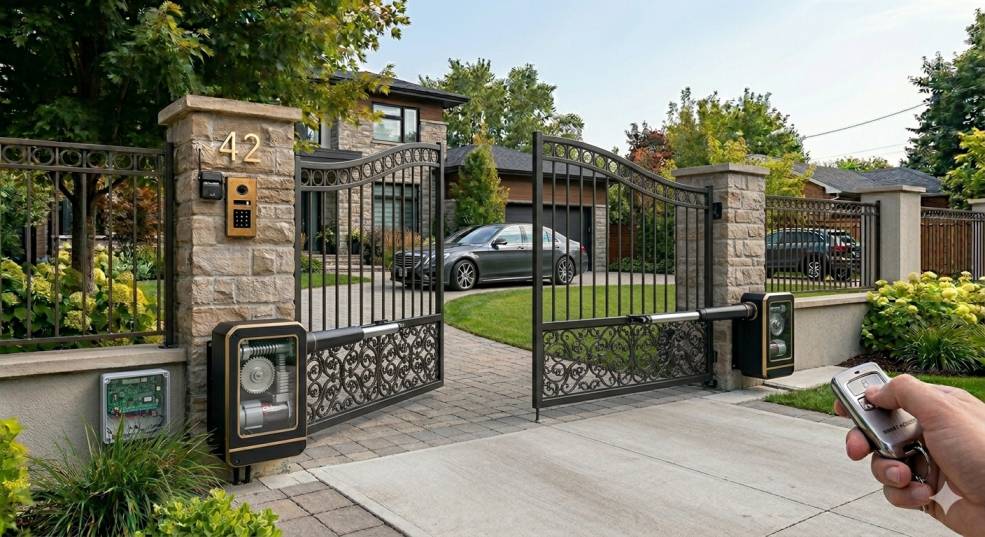
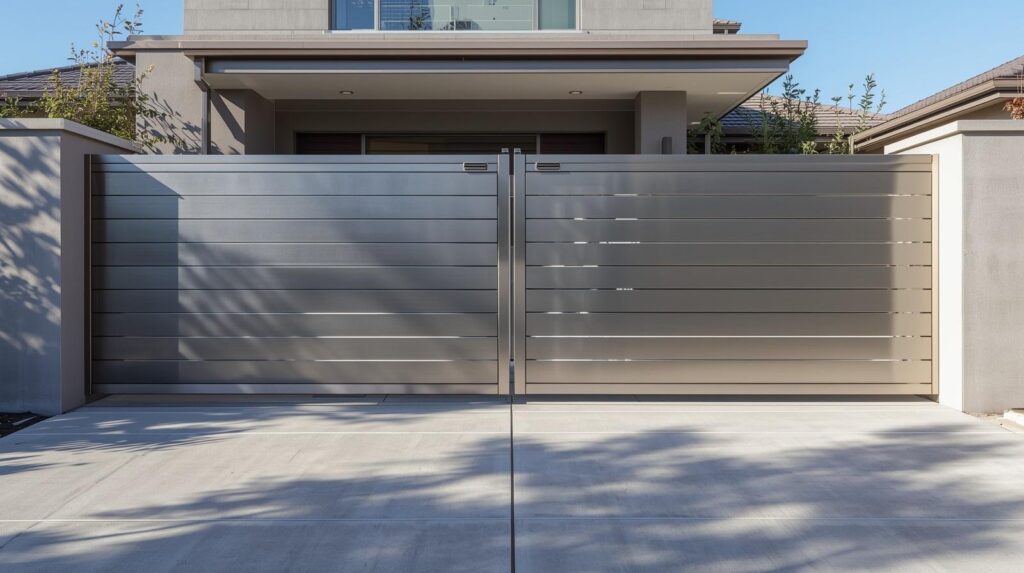
An automatic driveway gate provides your property with seamless security, curb appeal, and uncompromised privacy. However, the exact moment that beautiful piece of machinery gets stuck halfway open, or completely ignores your remote control, it transforms from a premium convenience into a major security vulnerability.
When your system acts up, finding a swift solution becomes your top priority. While some entry issues are caused by complex electronic failures that require certified precision, many performance drops stem from simple mechanical friction, minor blockages, or worn batteries.
This comprehensive troubleshooting and automatic gate repair guide breaks down why electric gates fail, how to isolate the root cause, and when it is safe to fix it yourself versus when you need to call the pros at Automatic Gates Warriors.
The Core Components of an Automatic Gate System
Before tackling any diagnosis, it is vital to map out the interconnected parts working behind the scenes. An automated entry setup is not just a gate; it is a complex ecosystem balancing electrical signals, mechanical force, and safety logic.
-
The Gate Opener (Operator Motor): The powerhouse driving the physical movement. It converts electrical current into mechanical energy via gears, chains, or hydraulic arms.
-
The Control Panel (Motherboard): The “brain” of the operation. It interprets incoming commands from access devices, processes sensor feedback, and dictates speed and limit thresholds.
-
Access Control Elements: Keypads, intercom systems, loop detectors, and remote transmitters that tell the gate to open or close.
-
Safety Devices: Photo eye sensors, reflective indicators, and edge sensors designed to stop or reverse movement before causing vehicle damage or personal injury.
-
Structural Hardware: The physical foundation, including tracks, rollers, chains, and hinges that anchor the entire weight of the system.
Understanding these foundational layers makes it much easier to diagnose exactly where the chain of communication has broken down.
1. The Gate Won’t Open or Close At All (Zero Response)
A completely unresponsive system is one of the most frequent dilemmas property owners face. The motor does not hum, the lights do not blink, and the gate remains completely static.
Common Root Causes
-
Total Power Interruption: Tripped circuit breakers, blown system fuses, or a disconnected main power line.
-
Depleted Backup Battery: If your system runs primarily on or utilizes a backup battery (very common in solar setups), a dead cell will halt operation.
-
Access Control Disconnection: A short circuit or dead battery in your keyless entry panel or receiver unit.
Step-by-Step Troubleshooting Sequence
If you have verified that active power is hitting the control panel but the unit remains unresponsive, it is highly likely that the main circuit board has suffered a terminal voltage surge or relay failure. In this scenario, it is best to consult professionals for formal gate opener installation and repair services to avoid dangerous electrical exposure.
2. The Gate Opens, But Refuses to Close
This is a classic security headache. The gate functions beautifully when letting you out or in, but it remains wide open, leaving your property completely exposed to the public eye.
Common Root Causes
-
Misaligned or Obstructed Safety Sensors: The photo eyes think a vehicle or pedestrian is blocking the path.
-
Active “Hold Open” Command: An accidental setting change on the loop detector or manual toggle switch.
-
Limit Switch Drift: The internal tracking mechanism falsely assumes the gate is already closed.
Fixing the Safety Sensor Beam
Safety photo eyes act as an invisible infrared beam running across your driveway entrance. If that beam is broken, the logic board defaults to a permanent open command to prevent structural crushing.
First, examine the small LED indicators located on both the transmitting and receiving sensor pods. A blinking or solid red light generally reveals a broken or poorly aligned link.
Take a clean micro-fiber cloth and gently clear away dust, spider webs, dried mud, or condensation built up over the lenses. Next, ensure that the brackets holding the sensors haven’t been bumped by a vehicle tire or a weed trimmer. Loosen the bracket screws slightly, adjust the angle until the status indicator shifts back to a solid, healthy blue or green light, and firmly retighten the hardware.
Environmental Note: Intense, direct sunlight striking an older sensor lens at a low angle can blind the receiver. If your closing failures only happen during specific hours of sunrise or sunset, creating a small makeshift shadow hood over the sensor housing can eliminate the issue entirely.
3. Grinding, Clicking, or Squealing Noises During Operation
Mechanical screeching or loud metallic clicks should never be ignored. They are clear early warning indicators that your gate is actively fighting against excessive physical resistance.
Common Root Causes
-
Insufficient Component Lubrication: Dry hinges, chains, or internal gearboxes.
-
Obstructions in the Physical Track: Leaves, pebbles, dirt, or ice packed tightly into a sliding gate’s V-groove.
-
Stripped Motor Gears: Internal nylon or metal gears wearing smooth inside the operator casing.
Mechanical Troubleshooting Checklist
For a sliding gate architecture, disconnect the operator via the manual release mechanism and try to push the gate completely closed by hand. It should glide with very little manual effort. If it catches, drags, or shudders at a specific point along its run, inspect the ground rail for physical damage. A bent section of track or an embedded pebble will stop a roller wheel instantly, triggering the motor’s internal overload protection system.
For swing gates, a structural sag at the free latch end places intense, asymmetric pressure on the gate hinges. Try lifting the latch end of the gate panel while it moves. If it swings smoothly with manual lifting assistance, the hinges are either heavily worn out, loose, or require a complete realignment.
Apply a premium, heavy-duty silicone spray or white lithium grease to all active pivot pins, chain links, and rollers every six months. Regular attention to these areas forms the core of an effective automatic gate maintenance plan, preventing minor structural drag from burning out your costly operator motor premature.
4. The Gate Moves Painfully Slowly
A sluggish entrance cycle is highly disruptive, particularly if your property sits directly off a busy thoroughfare where you cannot afford to wait in the street for the opening cycle to complete.
Common Root Causes
-
Low Voltage Drop: The incoming electrical voltage dips mid-cycle, starving the motor of the amperage it needs to generate rotational torque.
-
Extreme Ambient Cold: Thickened grease inside the mechanical joints combined with stiff, cold battery cells slows down performance.
-
Incorrect Electronic Force Settings: The force tolerances adjusted on the control motherboard are set too low for the true physical weight of the gate panel.
| Possible Cause | How to Confirm | Initial DIY Remedy |
| Track Debris Friction | Heavy scraping sound, visual dirt buildup | Wire-brush the V-groove and clear path |
| Aging Backup Battery | Gate slows down drastically halfway through the run | Test battery terminals with a digital voltmeter |
| Hinge Binding | Visual oxidation or rust weeping from pivot points | Apply deep-penetrating fluid followed by silicone grease |
| Improper Force Calibration | Motor cuts out completely if a minor gust of wind hits it | Re-calibrate the electronic clutch per manual |
5. The Gate Reverses Direction Spontaneously Mid-Cycle
You press the transmitter, the gate begins its path towards closing, travels a few feet, and then suddenly stops and reverses all the way back to a fully open state.
Common Root Causes
-
Over-Sensitive Obstruction Detection: Modern gate operators feature inherent load-sensing electronics. If the board senses even a minor spike in resistance, it assumes it has struck an object and immediately reverses to save the motor.
-
Worn or Warped Tracks/Rollers: Flat spots on roller wheels or a slight bend in the steel rail creates a physical hump that the motor mistakes for a solid obstruction.
-
Wind Resistance Incompatibilities: Solid-wood or full-sheet privacy gates act like sails during intense storms, creating wind loading that tricks the motor’s safety sensors.
Resolving Inherent Force Overloads
If your track is pristine and the rollers spin freely, the issue likely points to internal board settings. Most contemporary systems allow you to fine-tune the motor force thresholds using dial potentiometers or digital menus directly on the control module.
Turning up the force setting very slightly can help the system overcome minor wind resistance or natural structural age. However, caution is necessary: setting the force thresholds too high bypasses critical safety protocols, creating a system that will not reverse even if it strikes a vehicle. If adjusting the force parameters does not resolve the behavior, it is time to bring in professional automatic gate repair technicians to safely run diagnostic load testing.
DIY Maintenance vs. Professional Gate Repair Matrix
While taking care of basic maintenance tasks yourself saves money and prevents future issues, advanced electrical or high-tension structural repairs carry real safety risks and are best left to experienced professionals.
The Hidden Threat: Pests and Environmental Wear
Because automatic gate hardware lives outdoors year-round, Mother Nature is constantly working against it. The main control box presents an attractive, warm shelter for small pests during colder months.
Snails, spiders, ants, and mice routinely crawl inside control enclosures through unsealed conduit paths. Slugs and snails leaving trails across the back of an active circuit board will bridge high-voltage traces, causing an immediate electrical short circuit that fries expensive processors.
During your routine seasonal checks, always inspect the integrity of the housing gasket, clean out any spider webs or debris, and verify that insect barriers or silicone seals around wire entries remain intact.
Advanced Access Control System Issues
Sometimes the physical gate and motor are working perfectly, but the system breaks down because of a fault in the peripheral entry technology.
If your keypad refuses to grant entry, or your smart intercom fails to open the entrance for guests, the problem usually stems from compromised underground wiring loops, loose low-voltage connections, or radio frequency (RF) signal interference from nearby wireless networks.
Modern entry security often relies on robust access control systems to route data safely from your front gate back to your home or office. If these digital communication channels drop, checking terminal blocks for moisture intrusion or oxidation is a good place to start before replacing components.
Key Summary Takeaways
-
Prioritize the Basics First: Before paying for an emergency repair call, always confirm that your breakers are on, the manual release is locked, and your remote control batteries are fresh.
-
Keep Things Clean: The vast majority of unexpected gate stoppages are caused by dirty photo eyes or debris trapped inside the sliding track.
-
Lubrication and Maintenance Matter: Routinely treating hinges and chains with high-quality silicone spray prevents mechanical drag and protects your motor from burning out early.
-
Safety First: If a fix requires adjusting high-voltage wiring, structural welding, or altering critical safety crush settings, always work with a certified technician.
Frequently Asked Questions (FAQ)
Why is my automatic gate making a loud clicking sound but not moving?
A distinct clicking or chattering sound generally indicates that the main control relay is firing, but the motor cannot pull enough electrical current to spin up. This is usually caused by low incoming line voltage, a dying backup battery, or internal gear damage within the motor housing.
How often should I lubricate my driveway gate components?
For residential gates with normal daily traffic, lubricating all major moving parts (hinges, rollers, chains) every six months is plenty. If you live in a coastal area with salt air or an environment with heavy dust, shifting to a quarterly maintenance schedule will help prevent rust and premature wear.
Can I manually open my automated gate during a power failure?
Yes. Every professional automatic gate system features a dedicated manual release option. Depending on your model, this requires turning a physical key, pulling a release chain, or unlocking a foot lever to disengage the motor clutch, letting you move the gate freely by hand.
Why does my gate open smoothly but stop and reverse when trying to close?
This behavior almost always points to a problem with your safety devices. Check your photo eye sensors to make sure they aren’t dirty, misaligned, or blocked by growing weeds or bushes along the edge of your driveway.
What is the average lifespan of an automatic gate opener motor?
With routine maintenance, clean power, and prompt repairs, a high-quality commercial or residential gate opener motor will easily last between 8 to 15 years. Neglecting regular cleaning, ignoring worn rollers, or letting water pool around the motor housing can cut that lifespan in half.
Keep Your Property Secure
If you have gone through the basic troubleshooting steps and your gate is still giving you trouble, don’t let your property sit vulnerable. The expert team at Automatic Gates Warriors handles everything from fast emergency track repairs to full, modern security gate upgrades.
Whether you need a quick diagnostic check or are ready to plan a brand-new setup, we are here to help. Explore our full range of professional automatic gate installation services to see how we build reliable entry systems, learn more about our values on our about us page, or reach out directly via our contact us page to get a technician out to your property today!